Standing majestically in Union Square, the Matthias Corvinus Monument isn’t just another pretty statue—it’s the beating heart of Cluj-Napoca and one of Romania’s most impressive historical landmarks. If you’re planning a trip to Transylvania, this bronze masterpiece absolutely deserves a spot on your itinerary.
Meet the King Behind the Statue
Before we dive into the monument itself, let’s talk about the man it honors. Matthias Corvinus was born right here in Cluj-Napoca in 1443, and went on to become one of the most celebrated kings in Hungarian and Croatian history. During his reign from 1458 to 1490, he earned quite the reputation as a formidable warrior against the Ottoman Empire while simultaneously winning the hearts of his people by granting them economic privileges that improved their daily lives.
What really set Matthias apart was his military innovation—he created Europe’s first permanent professional army, known as the Black Army. This wasn’t just a guy sitting on a throne; he was a Renaissance man who understood both warfare and governance, making him the perfect subject for such a grand monument.
A Monument Two Decades in the Making
Here’s where the story gets interesting. The idea of honoring King Matthias with a statue first came up way back in 1882 when Cluj’s city council decided their hometown hero deserved proper recognition. But as anyone who’s dealt with civic projects knows, these things take time—a lot of time.
Enter János Fadrusz, a talented Hungarian sculptor who took on this ambitious project. He completed the bronze sculptures in 1893, and they were so impressive that they were displayed at the 1900 Universal Exhibition in Paris before finally making their way home. The monument was officially inaugurated on October 12, 1902, during grand festivities that brought the city together in celebration.
What Makes This Statue Special
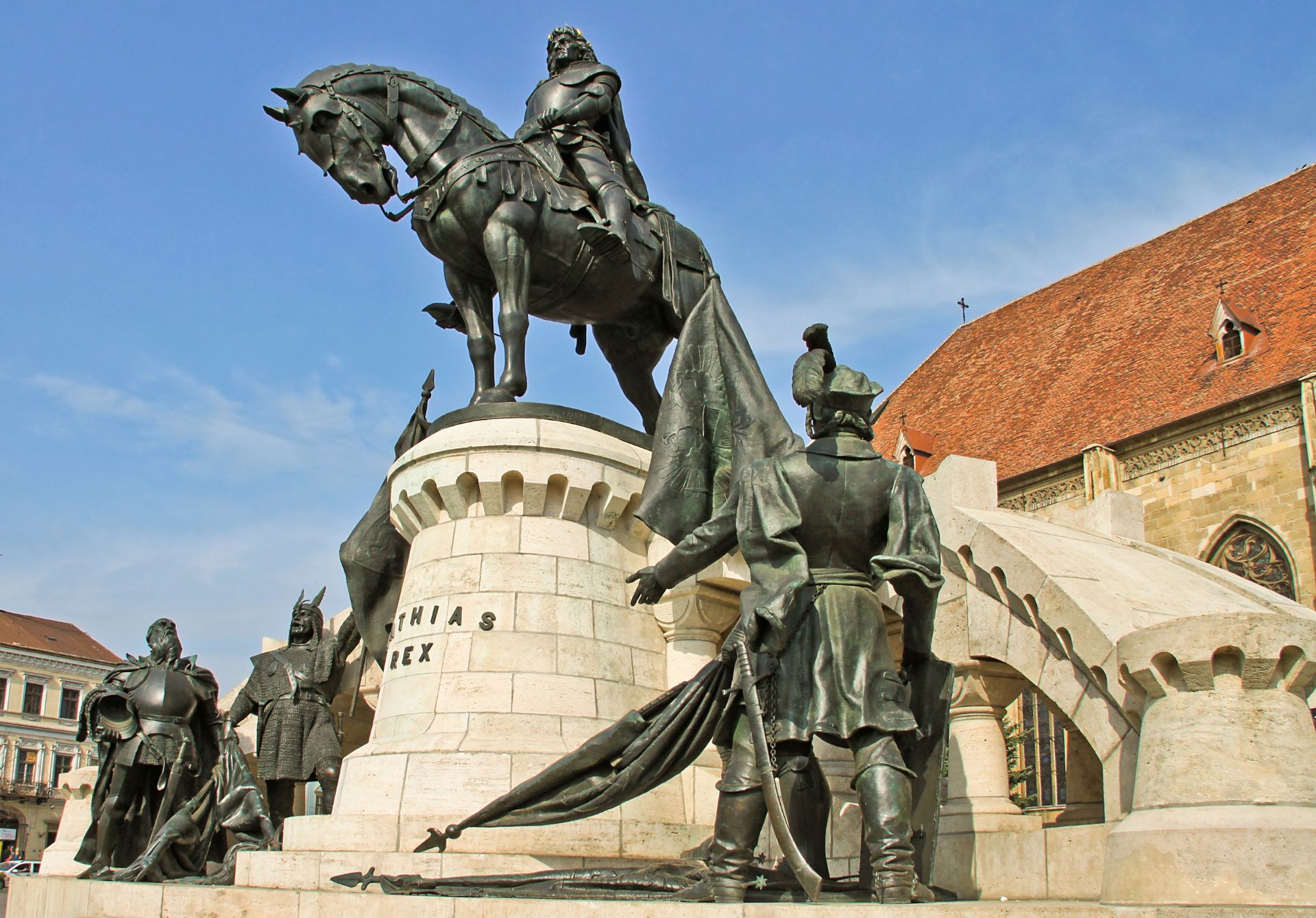
When you first lay eyes on the Matthias Corvinus Monument, its sheer size will likely catch you off guard. The equestrian statue is twice life-size, creating an imposing yet dignified presence that commands Union Square. But it’s not just about size—the attention to detail is extraordinary.
The monument features several key elements that make it truly remarkable:
- The central bronze statue depicts King Matthias mounted on horseback in full regal attire, symbolizing his leadership and authority
- Four commanders surround the king, representing the military strength and loyalty that supported his reign
- The sculptor added a personal touch that eagle-eyed visitors love discovering—Fadrusz included his own face among the warriors, specifically on the glowering figure to the far side of the king
- The craftsmanship showcases the finest bronze casting techniques of the early 20th century, with intricate details that have weathered over a century beautifully
The Monument’s Controversial History
Like many historical monuments in regions with complex pasts, the Matthias Corvinus statue hasn’t been without controversy. At one point, Romanian authorities added a small plaque suggesting the king was of Romanian origin—a claim that historians find questionable at best. This reflects the broader cultural and national tensions that have characterized Transylvania’s history, where Hungarian, Romanian, and other influences have intertwined and sometimes clashed.
Today, the monument stands as a classified historic monument, officially recognized in the National Register of Historic Monuments in Romania under the number CJ-III-m-A-07819. Regardless of the debates around identity and heritage, most visitors and locals appreciate it simply as an impressive work of art and an important piece of the city’s story.
Visiting the Statue: What You Need to Know
The monument sits in Union Square (Piața Unirii), which is essentially the social and geographic heart of Cluj-Napoca. This is one of the largest squares in all of Romania, and it’s surrounded by stunning Habsburg architecture that creates a picture-perfect setting for the statue.
The square itself is incredibly walkable and visitor-friendly. You’ll find plenty of cafés lining the perimeter where you can grab a coffee and simply soak in the atmosphere. Unlike many bustling European city centers, Union Square has a refreshingly laid-back vibe. Locals take their time here, and there’s a palpable sense of community that travelers consistently comment on.
Right behind the statue, you’ll spot St. Michael’s Church, a Gothic masterpiece with one of the highest church towers in the region. The church provides a dramatic backdrop for photos and is worth exploring in its own right. The juxtaposition of the medieval church and the early 20th-century monument creates a visual timeline of Cluj’s architectural evolution.
Photography Tips and Best Times to Visit
If you’re into photography (and honestly, who isn’t these days?), the Matthias Corvinus Monument offers fantastic opportunities:
- Early morning light creates beautiful shadows that highlight the bronze’s texture and the fine details of the sculpture
- Golden hour in the evening bathes the entire square in warm light, perfect for capturing the monument against the Habsburg buildings
- The square hosts various festivals and events throughout the year, adding cultural context and vibrant atmosphere to your photos
- Winter visits offer a completely different aesthetic, with potential snow creating a fairy-tale atmosphere around the monument
Making the Most of Your Visit
While the statue itself can be appreciated in about 15-20 minutes, we’d recommend budgeting at least an hour or two for Union Square as a whole. This gives you time to walk around the monument from different angles, explore St. Michael’s Church, and enjoy the café culture that makes Cluj so special.
The square frequently hosts local markets, concerts, and cultural events, so check what’s happening during your visit. There’s something special about experiencing the monument not as an isolated tourist attraction but as part of the living, breathing city center that locals use every day.
For those interested in diving deeper into the history, consider hiring a local guide or joining a walking tour of Cluj-Napoca. Many tours start or pass through Union Square, and a knowledgeable guide can share stories and historical context that you’d miss on your own.
Final Thoughts: Why This Statue Matters
The Matthias Corvinus Monument represents far more than just impressive bronze work—it’s a window into Cluj-Napoca’s layered history, cultural complexity, and artistic heritage. Whether you’re a history buff, an architecture enthusiast, or simply someone who appreciates beautiful public art, this monument delivers on every level.
What makes it particularly special for travelers is how accessible and integrated it is into daily city life. This isn’t some roped-off museum piece; it’s the centerpiece of a bustling square where locals meet, events unfold, and the city’s past and present converge. You’ll leave with great photos, sure, but more importantly, you’ll leave with a deeper understanding of why Cluj-Napoca is considered one of Transylvania’s most captivating cities.
So when you’re planning your Romanian adventure, make sure the Matthias Corvinus Statue and Union Square are penciled in. Grab a coffee, find a bench, and take your time with this magnificent monument. It’s been standing there since 1902, after all—it’ll wait for you to fully appreciate it.