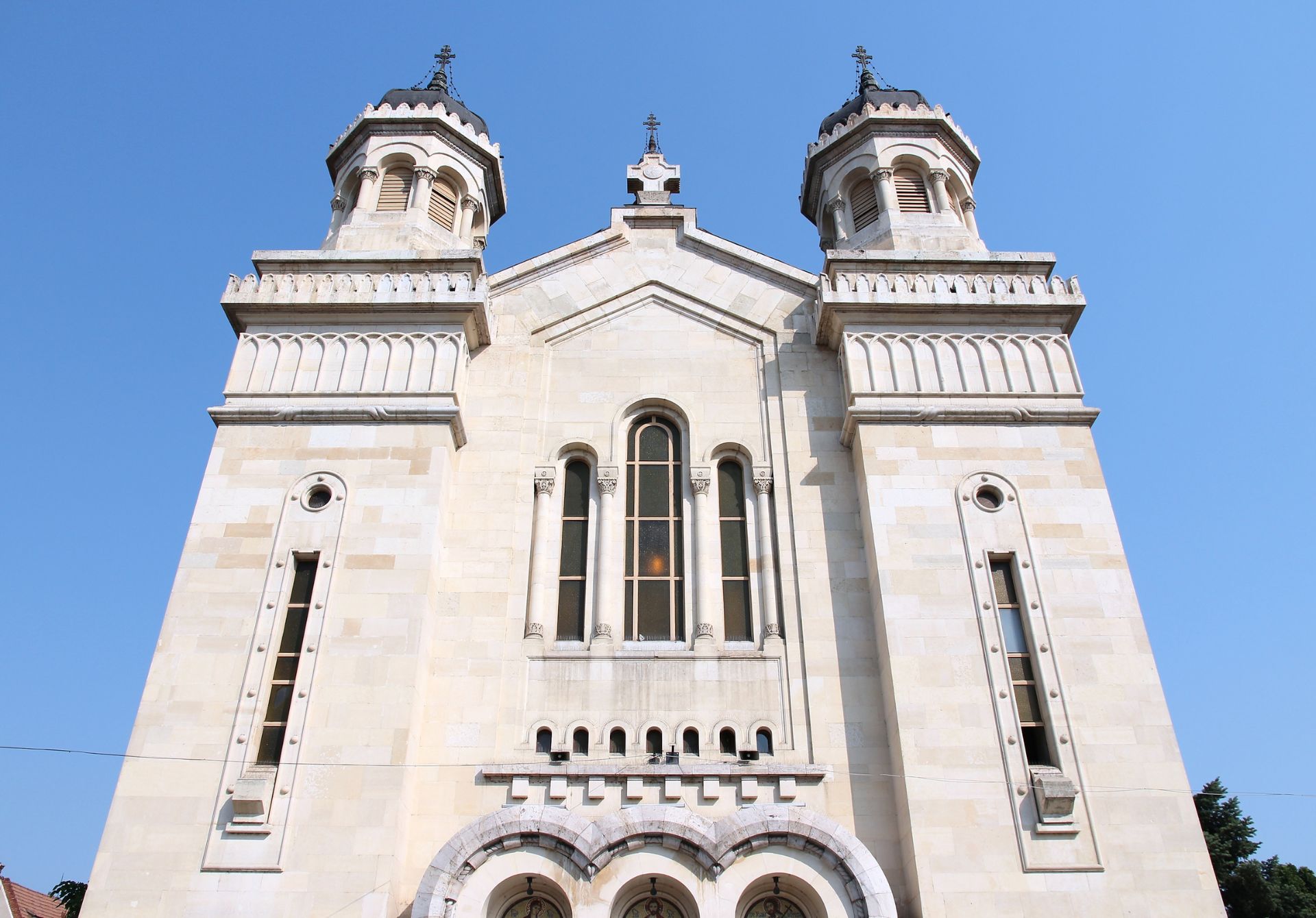
If you’re planning a trip to Cluj-Napoca, the vibrant heart of Transylvania, there’s one architectural masterpiece you absolutely can’t miss—the Dormition of the Theotokos Cathedral. Trust me, this isn’t just another church on your tourism checklist. This stunning Orthodox cathedral is a jaw-dropping symbol of Romanian heritage that’ll have you reaching for your camera before you even step inside.
A Cathedral Born from Unity and Ambition
Here’s what makes this place special: the cathedral was built between 1923 and 1933, right after Transylvania united with Romania. It wasn’t just about constructing a beautiful building—it was about making a statement. Bishop Nicolae Ivan had a vision to create a grand Orthodox cathedral that would stand as a testament to Romanian identity in Cluj-Napoca, and boy, did he succeed.
The cornerstone was laid on October 7, 1923, and the ceremony was no small affair. Crown Prince Carol II and Prime Minister Ion I. C. Brătianu showed up to mark the occasion, highlighting just how significant this project was to the newly unified nation. After a decade of dedicated work, the cathedral officially opened its doors on November 5, 1933, with King Carol II and the future King Michael I in attendance.
Architecture That Takes Your Breath Away
What you’re looking at when you approach this beauty is something called Brâncovenesc style—a uniquely Romanian architectural approach that brilliantly fuses Renaissance elegance with Byzantine grandeur. The architects George Cristinel and Constantin Pomponiu (who also designed the Mausoleum of Mărășești) knew exactly what they were doing.
The cathedral’s design features include:
- A magnificent central dome inspired by Istanbul’s legendary Hagia Sophia—talk about aiming high!
- Four Brâncovenesc-style towers surrounding the main dome, creating a silhouette that dominates the city skyline
- Eighteen massive stone columns that support the dome, each one a sculptural masterpiece in its own right
- Stone materials sourced from local quarries in Baciu and Banpotoc, connecting the building to the very earth of Transylvania
Step Inside for an Artistic Revelation
The exterior is impressive, sure, but wait until you see what’s inside. Between 1928 and 1933, artists Anastase Demian and Catul Bogdan—both professors at Cluj’s Art Academy—covered the interior walls with breathtaking murals. These aren’t your average church paintings; they’re stunning works of art that blend Byzantine traditions with Romanian sensibilities, creating an atmosphere that’s both spiritual and culturally significant.
Walking through the cathedral feels like stepping into a different era. The cool interior provides welcome relief on hot summer days, while the rich colors and intricate details of the frescoes reward those who take their time to really look around.
Prime Location in the Heart of the City
Location-wise, you’ve hit the jackpot. The cathedral sits prominently on Avram Iancu Square, right in the historical center of Cluj-Napoca. You literally can’t miss it—it’s that commanding presence that catches your eye as soon as you arrive at the square. Even better, you’re sharing the square with the Cluj-Napoca National Theatre and the Avram Iancu Statue, making it a perfect spot for a comprehensive cultural tour.
Practical Tips for Your Visit
Here’s what you need to know before you go:
- Admission is completely free—yes, you read that right!
- The cathedral is generally open daily from 10:00 AM to 7:00 PM
- Plan your visit between noon and 6:00 PM for the best experience, as religious services are typically held from 8:00 AM to noon and 6:00 PM to 8:00 PM
- Dress respectfully—this is an active place of worship, not just a tourist attraction
- Photography is usually allowed, but be mindful of worshippers and avoid using flash during services
More Than Just a Tourist Stop
What really sets this cathedral apart is that it’s not just a historical monument frozen in time. It’s the seat of the Metropolitan of Cluj, Alba, Crișana and Maramureș, meaning it’s a living, breathing center of Orthodox faith in the region. You might catch a service in progress, hear the haunting beauty of Orthodox chanting, or witness locals lighting candles in quiet devotion.
This dual identity—as both a major tourist attraction and an active religious center—gives the cathedral an authenticity that many historical sites lack. You’re not just looking at history; you’re experiencing a place that continues to play a vital role in the community’s spiritual life.
The Bottom Line
The Dormition of the Theotokos Cathedral isn’t just another box to tick on your Cluj-Napoca itinerary—it’s a must-see destination that perfectly encapsulates Romanian history, architectural brilliance, and living faith. Whether you’re an architecture buff, a history enthusiast, or simply someone who appreciates beautiful spaces, this cathedral delivers on every level.
From its Hagia Sophia-inspired dome to its stunning interior murals, from its politically significant construction to its continued importance as a religious center, this cathedral tells a compelling story of Romanian identity and resilience. Best of all, it’s easily accessible in the city center and won’t cost you a cent to enter.
So when you’re planning your concierge services or tourism package in Cluj-Napoca, make sure the Orthodox Cathedral is right at the top of your list. It’s one of those rare places that manages to be both monumentally impressive and genuinely meaningful—a combination that’ll leave you with memories (and photos) that last a lifetime.